

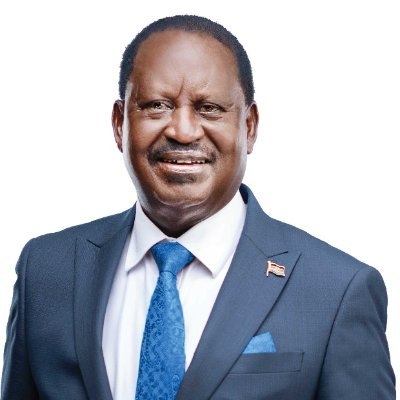
Raila Amolo Odinga was born on January 7, 1945, in Maseno, Kenya, into a family deeply rooted in the nation’s political fabric. His father, Jaramogi Oginga Odinga, was Kenya’s first Vice President, a legacy that inspired Raila throughout his life.
Growing up in a politically charged environment, Raila was exposed to the difficulty of governance and the challenges of leadership from an early age. His education took him abroad, where he studied in East Germany, further broadening his perspectives. Upon returning to Kenya in the early 1970s, he briefly taught at the University of Nairobi and engaged in various business ventures. However, it was in the realm of politics that Raila made his most significant impacts.
In the early 1980s, as Kenya grasped with a one-party political system under President Daniel arap Moi, Raila emerged as a vocal critic of the regime. His advocacy for multiparty democracy and human rights led to his arrest in 1982 following a failed coup attempt, a charge he vehemently denied. He was detained without trial for nearly six years, a period that shaped his resolve and commitment to democratic ideals.
After his release, Raila briefly went into exile in Europe in 1991. Upon returning to Kenya in 1992, he won a parliamentary seat in Nairobi, marking the beginning of his long-standing political career. During his two decades as a legislator, Raila became a national figure, gaining massive support among people disaffected by official corruption and poverty. In 1997, he launched his first presidential campaign.
Despite never securing the presidency, Raila’s influence was undeniable. He played a pivotal role in the repeal of Section 2A of the Kenyan Constitution in 1991, which had established the one-party system, thereby paving the way for multiparty democracy. In 2002, he supported Mwai Kibaki’s presidential bid, leading to Kibaki’s victory. However, in 2005, Raila opposed Kibaki’s proposed constitutional changes, leading to the formation of the Orange Democratic Movement (ODM). The ODM campaigned against the constitutional changes in a 2005 referendum, which they won, solidifying Raila’s position as a leading opposition figure.
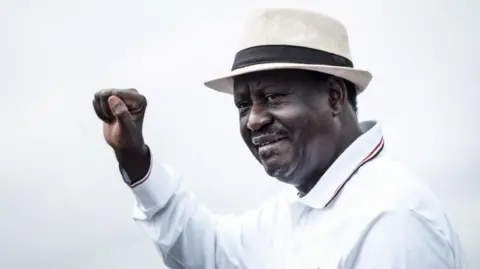
In the 2007 presidential elections, Raila ran as the ODM candidate. The election results were disputed, leading to widespread violence and over 1,000 deaths. In the aftermath, international mediation led to a power-sharing agreement, with Raila becoming Kenya’s Prime Minister in 2008. During his tenure, he focused on national reconciliation and development, though his tenure was sided by political tensions and challenges in implementing reforms.
Odinga’s political journey was marked by multiple presidential bids, all of which were unsuccessful. Despite these setbacks, he remained a central figure in Kenyan politics, advocating for constitutional reforms and democratic governance. In 2010, Kenya adopted a new constitution, a process in which Raila played a significant role. The new constitution introduced significant changes, including the devolution of power to regional governments, aiming to promote inclusivity and reduce ethnic tensions.
In the 2017 elections, Raila contested the presidency again. The Supreme Court annulled the results, citing irregularities, marking the first time in Africa that a presidential election result was overturned by a court. However, Raila chose not to participate in the subsequent rerun, citing the need for electoral reforms. In 2018, he initiated the Building Bridges Initiative (BBI) with President Uhuru Kenyatta, aiming to address issues of national unity and inclusivity. The BBI proposed constitutional amendments, but the process faced legal challenges and political opposition.
In 2022 elections, Raila with his never giving up will contested the presidency but to no avail again. Regardless of the failed attempts Raila never showed a sign of giving up in political world.
Beyond politics, Raila was a patron of the arts, particularly music. He was known for supporting various artists and cultural initiatives. His influence extended into the music scene, where he adopted songs that resonated with his political messages, propelling them to national prominence. This intersection of politics and culture highlighted Raila’s multifaceted approach to leadership and his understanding of the power of media in shaping public opinion.
On October 15, 2025, Raila Odinga passed away at the age of 80 in Kochi, India, due to a cardiac arrest during a morning walk. His death marked the end of an era in Kenyan politics. President William Ruto declared a seven-day mourning period and announced a state funeral to honour Raila’s legacy as a “giant of democracy.” “A patriot”
Raila Odinga’s life was a testament to resilience, advocacy, and the relentless pursuit of democratic ideals. His legacy continues to inspire generations of Kenyans and Africans committed to justice, unity, and reform.
Eternal Peace Grant Him Oh Lord.

Leave a Reply