

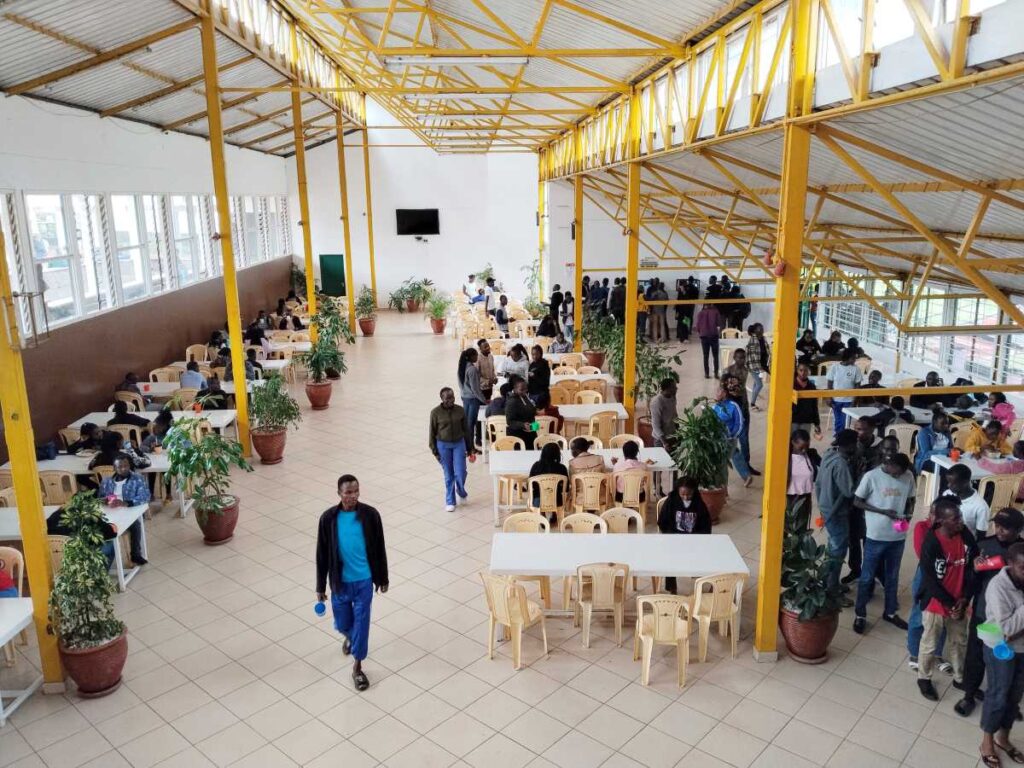
The Kenya School of TVET has introduced an online ordering system at its college mess, streamlining meal orders and offering convenience to students. However, challenges such as system delays, slow balance updates, and insufficient machines for the growing student population reveal the hurdles of embracing this innovative dining solution.
Situated in the serene Gigiri area of Nairobi, lies the Kenya School of TVET (KSTVET).
The campus boasts a tranquil atmosphere, modern facilities, well-maintained grounds, and a peaceful environment that supports learning. Its proximity to prominent institutions like the UNEP, the US and Canadian embassies adds to its stature.
It’s a leader not only in training top-tier technical trainers regionally but also in technological innovation. KSTVET recently embraced technology to revolutionize how students order meals. By introducing an innovative online ordering system for the college mess, the institution aimed to bring efficiency, convenience, and modernization to dining services.
Convenience at Students’ Fingertips
For many students, the online ordering system has improved their dining experience.
Previously, paying at the mess counter was a time-consuming affair. A single student could take upto a minute to pay for food. With lecture schedules that demand sharp time management, the endless wait times were nothing short of a logistical nightmare. Students often found themselves caught between skipping meals or arriving late to their next class.
However, with the new system, ordering a meal has become as simple as a few clicks on the computer. The interface enables students to browse through the daily menu, place their orders, and pick at the counter. Whether craving chapati and beans or the ever-popular rice special, students can now skip the long lines and head straight to the pick-up counter.
“The process of getting food is a breeze. Now, when I get to the mess, I order food and get served immediately. It’s such a relief!” – Mercy, a student pursuing Information Technology.
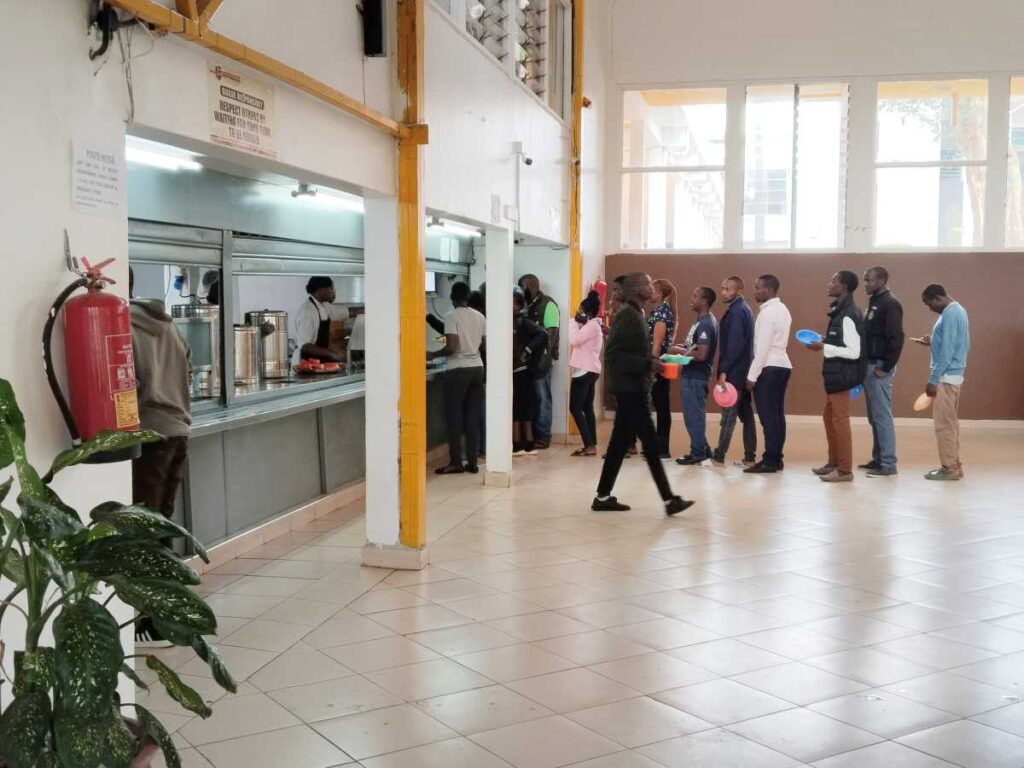
Other students, too, agree the system provides convenience. “Since money is loaded beforehand, time is saved. All that is left is to select and pick the food” shares Ahmed Saleh, an engineering student.
Installation
The system was first installed in the year 2020 at the height of the COVID-19 pandemic. “The idea was to limit contact and promote social distancing, a key way to fight the disease, explains Frank Oduor, one of the software engineers currently maintaining the system.
The Flip Side: System Glitches and Growing Pains
However, while the system has brought significant advantages, it has not been without its share of challenges. Students remain divided between appreciation for the ease it has provided and frustration with its growing pains.
One of the most common complaints is the issue of system delays. On peak days, students report experiencing extended loading times when accessing the platform, particularly during lunch rush hours. These lags have, on occasion, resulted in students receiving their meals much later than expected.
“Sometimes the system hangs and cannot process orders.” says Edith, a medical engineering student. Another major sticking point for users is the lag in updating balances in students’ accounts. With students required to top up their accounts via M-Pesa, a delay in balance updates often leaves students stranded and unable to place their orders. “I experienced that yesterday. I had already deposited money into the account,” laments Joseph Mwangi, an ICT student, “but it took close to 5 minutes for my account to reflect the balance. By the time I could order, the food I wanted was sold out.”
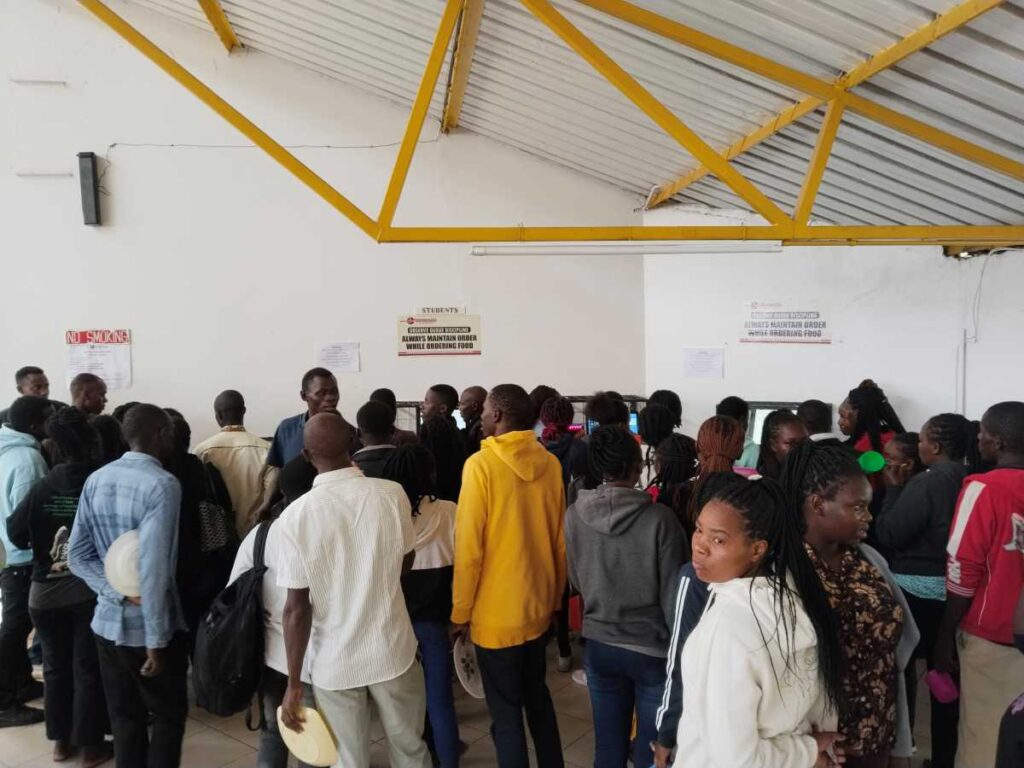
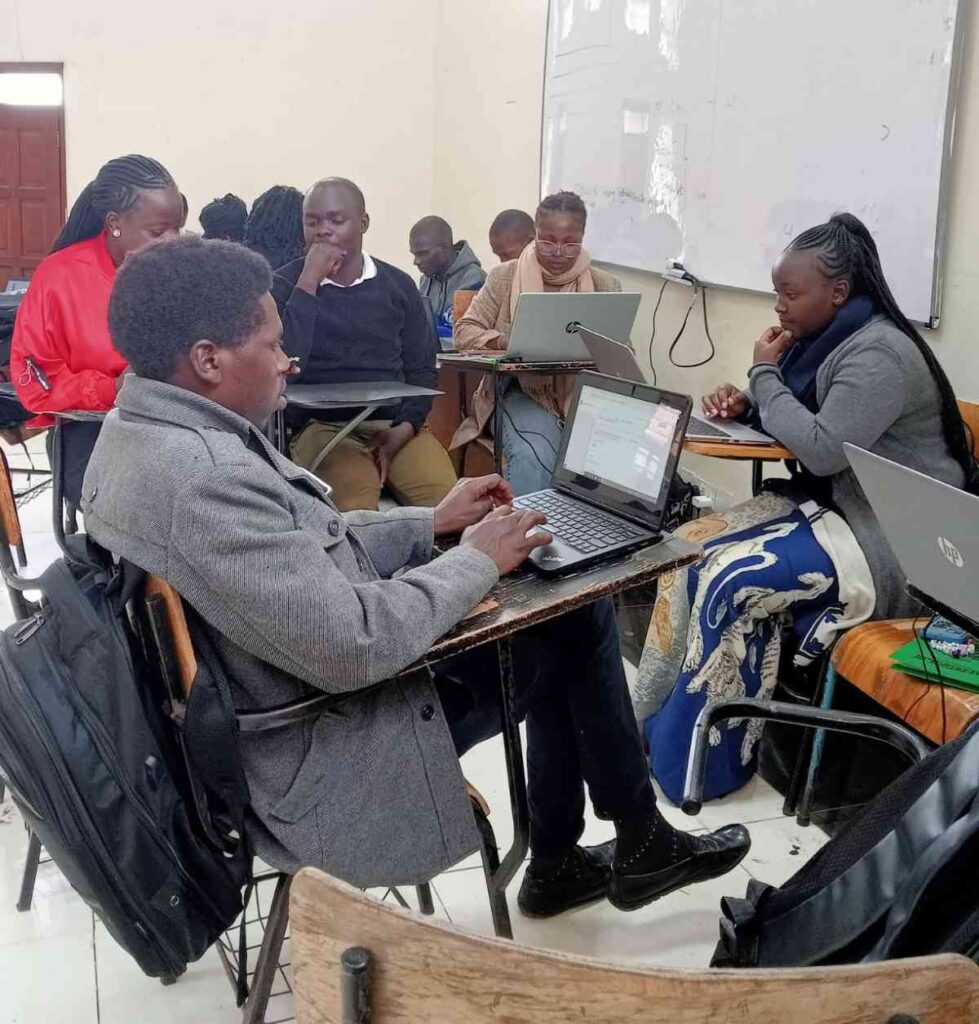
Moreover, the campus population far exceeds the available resources to support the new system. With around 1,000 students relying on the mess daily, the limited number of computers poses logistical challenges. Long queues have now shifted from the serving counters to the computers.
Student Suggestions
While the system is far from perfect, students remain optimistic about its potential. Many have expressed a willingness to be patient as the administration works to resolve the teething issues. “It’s a great idea that just needs better execution,” says Alice Omondi, a mechanical engineering student. “If they could address the delays and install more computers, it would make a world of difference.”
Suggestions for improvement have also included offering additional training sessions for students and staff on how to use the system efficiently. “Some of the delays are caused by confusion,” says Omondi. “If everyone understands how to navigate the system, it would reduce the bottlenecks.”
Other students have proposed integrating additional payment gateways like Airtel Money to facilitate faster balance updates, as well as introducing a mobile application for those who don’t want to use the computer machines.
Some also believe the college should invest in a more robust IT infrastructure to handle peak-time traffic and avoid the dreaded system crashes.
Hope for the future
Frank says that measures were being taken to enhance the system’s performance. “We recognize the challenges and are committed to addressing them promptly. Our goal is to provide students with the best possible experience. As with any new technology, there will be an adjustment period, but we are confident the system will meet expectations in due course.”
Frank also hinted at the possibility of launching a mobile app for the system, which would be more user-friendly and scalable than the current web-based version.
On the bright side of things, he says the system has come a long way. He feels there are improvements, though the current students may not notice because they never faced the previous challenges.
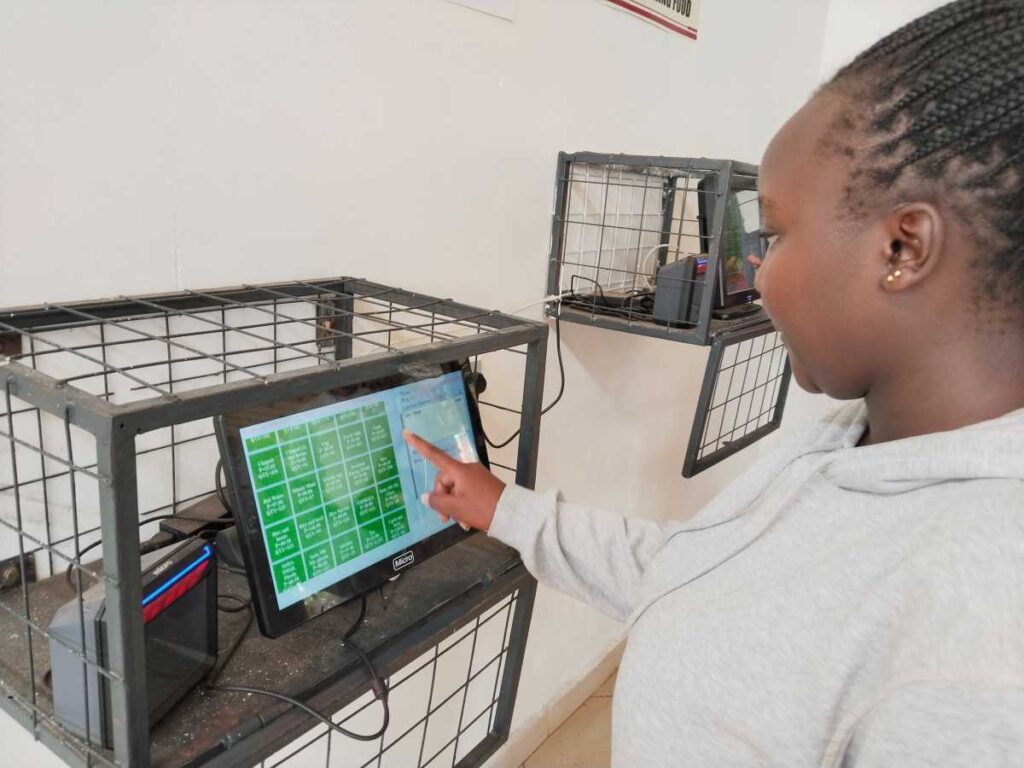
“We’ve come a long way. There were days when a lost student card would mean lost money, because someone else could use it without their knowledge.“ says Frank.
“Also, previously, an M-Pesa refund was impossible. That’s now in the past. When you lose your card you can report it and get it blocked from further use. And yes, a cash refund into an M-pesa wallet is possible in case of an overpayment.”
He adds that the system did allow order modifications in the past, but students quickly abused the privilege. “There was a high number of students wishing to exchange food. So high it confused the serving assistants. It was unsustainable and had to be dropped.”
The Verdict
For all its shortcomings, the online ordering system at the Kenya School of TVET represents a commendable step toward integrating technology into student life. It underscores the college’s forward-thinking approach and its commitment to easing the everyday pressures students face. However, to fully deliver on its promise, the system must evolve to address the challenges that hinder its functionality and inclusivity.
As the college continues to refine its digital dining solution, one thing remains clear: change, while often messy, is a necessary ingredient for progress. In time, the online ordering system could well become a model for other institutions across the country—a testament to how technology can transform educational institutions. “We just ask for a little patience,” concludes Frank.



Leave a Reply